

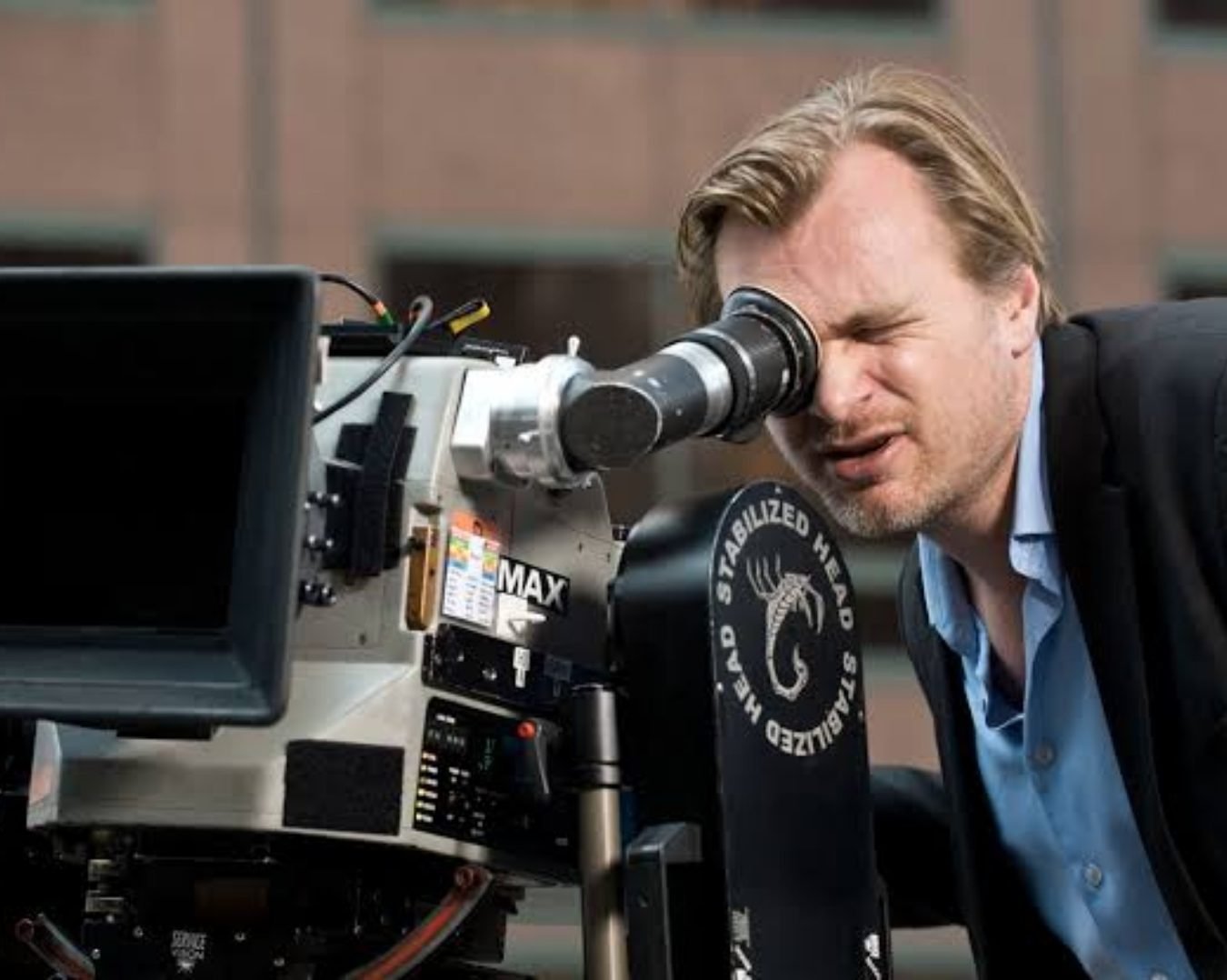

Christopher Nolan: The Director Who Changed How We Watch Movies
Christopher Nolan became one of Hollywood’s biggest directors by doing something filmmakers are often warned against.
He made movies harder to follow, harder to predict, and sometimes even harder to explain afterward.
While Hollywood often looks for stories audiences can understand immediately, Nolan built an extraordinary career by doing almost the opposite. He asked viewers to pay attention. He played with time, hid information, created stories inside stories, and wasn’t afraid to leave audiences wondering what exactly they had just watched.
But Christopher Nolan’s journey to becoming one of Hollywood’s most recognizable filmmakers didn’t begin with Batman or billion-dollar blockbusters.
It began with a camera, a few friends, and a very small budget.
The Filmmaker Who Started With Almost Nothing
Christopher Nolan developed an interest in filmmaking at a young age.
He began making short films with a Super 8 camera as a child, experimenting with moving images long before Hollywood had any reason to know his name.
What made Nolan different wasn’t simply that he wanted to make movies. He was fascinated by how films could manipulate an audience’s understanding of a story.
He was interested in:
- Perception
- Memory
- Time
- Reality
- What audiences know
- And, perhaps most importantly, what they think they know
Those ideas would eventually become the foundation of his career.
But before Nolan could experiment with massive Hollywood productions, he first had to prove that he could make a movie at all.
Following: The Tiny Film That Started Everything
Nolan’s first feature film, Following, was released in 1998.
It was made on an extremely small budget. There were no giant Hollywood sets, famous stars, or enormous visual-effects departments.
Nolan worked around the limitations.
He shot the film in his spare time, often using friends and people around him. Because the budget was so small, the production had to be carefully planned.
Those limitations became part of Nolan’s education.
He learned how to make the most of what he had. He learned how to structure a story. And he learned something that would become increasingly important throughout his career:
A movie doesn’t need to be enormous to make an audience think.
Then Came Memento
If Following introduced Christopher Nolan as a filmmaker, Memento made Hollywood pay attention.
The concept was almost perfectly suited to his interests.
The main character, Leonard Shelby, suffers from severe short-term memory loss and struggles to remember events long enough to understand what is happening.
But Nolan didn’t simply make a movie about memory.
He structured the movie so the audience would experience the confusion themselves.
The story moves backward and forward through time. Information arrives out of order. Scenes that initially seem to make sense become confusing when new information appears.
The audience is forced to piece the story together alongside Leonard.
It was an unusual approach for a mainstream movie.
And it worked.
Memento became a critical success and earned Nolan an Academy Award nomination for Best Original Screenplay. Suddenly, Hollywood had a new director to watch.
Nolan Had Found His Obsession
Looking back at Christopher Nolan’s career, Memento almost feels like a blueprint for what came next.
He wasn’t interested in telling stories in the simplest possible way. He wanted the structure of the movie itself to become part of the experience.
Time wasn’t just something happening in the background.
Time could be the story.
Memory could be the story.
Perspective could be the story.
That idea would appear again and again throughout Nolan’s movies.
But his next major opportunity would require him to enter a completely different world:
Superheroes.
Christopher Nolan Takes on Batman
When Christopher Nolan was chosen to direct Batman Begins, it was a major opportunity.
It was also a risk.
Batman had already been portrayed on screen in very different ways. Nolan took the character in another direction.
Instead of treating Batman primarily as a comic-book fantasy, he approached the story more like a dark crime drama.
Bruce Wayne became a psychologically damaged man trying to turn his fear and anger into a purpose. Gotham became a dangerous city rather than a colorful comic-book backdrop, and the villains were treated as serious threats.
The result was Batman Begins.
The movie didn’t simply restart the Batman franchise.
It changed expectations for what a superhero movie could be.
The Dark Knight Changed the Game
Then Nolan went even further.
The Dark Knight wasn’t just a superhero sequel. It became a crime thriller, a character study, and a moral story wrapped inside a blockbuster.
Heath Ledger’s Joker became one of the most unforgettable villains in modern cinema.
But the movie’s impact wasn’t only about Ledger.
Nolan built a story around difficult questions:
What happens when society is pushed toward chaos?
How much can a person sacrifice for a principle?
Can someone remain morally good when the world around them is falling apart?
The film became a massive commercial and critical success.
And Nolan had accomplished something important.
He had convinced audiences that a superhero movie could demand the same kind of attention as a serious drama.
Then He Made Inception
After Batman, Nolan could have continued making superhero movies.
Instead, he created one of his most ambitious original ideas:
Inception.
The basic concept sounded almost impossible to explain in one sentence.
A group of people enters dreams.
Inside those dreams are more dreams.
Time behaves differently at different levels.
And the characters must navigate an increasingly complicated world while trying to accomplish a specific mission.
It was exactly the kind of story Nolan had been developing throughout his career.
But this time, he had a Hollywood-sized budget.
He could finally build the enormous world his imagination required.
The Famous Inception Hallway Scene Wasn’t Just CGI
One of the most memorable sequences in Inception involves a fight inside a rotating hotel hallway.
The visual effect looks like something that could have been created entirely inside a computer.
But Nolan’s team constructed a massive rotating hallway set.
The actors actually performed inside the rotating environment.
This became one of the characteristics of Nolan’s filmmaking.
Whenever possible, he has favored physical environments and practical effects rather than relying entirely on digital imagery.
The goal isn’t simply realism for its own sake.
It’s about creating something the camera can photograph physically, something the actors can interact with, and something that feels tangible.
That philosophy would become even more important in his later films.
And Then Came Interstellar
Nolan’s obsession with time, memory, and human perception continued with Interstellar.
This time, the scale became enormous.
The movie explored space travel, relativity, time dilation, and humanity’s struggle to survive.
But underneath all the science was something surprisingly emotional:
Family.
The relationship between Cooper and his daughter became the emotional center of the story.
One of the movie’s most devastating ideas is that time doesn’t pass equally for everyone.
A few hours for one person can mean years for another.
Nolan turned a scientific concept into an emotional problem.
And once again, audiences left the theater discussing what they had just experienced.
Nolan Didn’t Make Movies Easier
This became one of the defining patterns of Christopher Nolan’s career.
Every time he became more successful, he could have made his movies simpler.
Instead, he often made them more ambitious.
The Dark Knight became more complex than Batman Begins.
Inception created an entirely new set of rules.
Interstellar combined science fiction with complicated ideas about time.
Then came a movie about one of the most important events of World War II.
Dunkirk Broke the Rules Again
With Dunkirk, Nolan did something very different.
Rather than telling the story of the Dunkirk evacuation in a straightforward chronological fashion, he divided the film into three different timelines.
One followed soldiers on land.
One followed civilians at sea.
One followed pilots in the air.
But those timelines moved at different speeds.
The structure meant that events seen from one perspective could change meaning when viewed from another.
Once again, time became part of the storytelling.
Nolan didn’t need lengthy explanations to tell the audience what was happening.
He allowed the structure to communicate it.
Then Came Oppenheimer
After years of making fictional worlds, Nolan turned toward one of the most consequential scientific and political stories of the twentieth century:
J. Robert Oppenheimer.
The result was Oppenheimer.
The movie followed the scientist who became one of the central figures behind the development of the atomic bomb.
But Nolan didn’t make it a simple historical biography.
He focused heavily on Oppenheimer’s relationships, political pressures, scientific ambitions, and the consequences of what he helped create.
The film also used different visual and narrative approaches to distinguish different parts of Oppenheimer’s story.
Once again, Nolan expected the audience to actively participate.
And the film became another major milestone in his career.
The Movie That Finally Gave Nolan the Oscar
For years, Christopher Nolan had been one of the most respected directors in Hollywood without having won the Academy Award for Best Director.
Then Oppenheimer changed that.
At the 2024 Academy Awards, Nolan won Best Director. The film also won Best Picture.
After decades of filmmaking, Nolan had reached another level.
The director who had started with tiny productions and complicated ideas was now standing on the biggest stage in the film industry.
And he had done it without abandoning the style that made him different in the first place.
Why Christopher Nolan Doesn’t Make Movies the Easy Way
Perhaps the most interesting thing about Christopher Nolan is that he doesn’t seem particularly interested in making the audience’s job easy.
He trusts viewers.
He assumes they can follow complicated structures. He doesn’t always explain every detail. He allows questions to remain unanswered. And sometimes, he deliberately creates uncertainty.
That’s why people continue discussing his movies long after leaving the theater.
A Nolan film isn’t necessarily finished when the credits roll.
For many viewers, that’s when the second experience begins.
They start asking questions.
They search for explanations.
They debate endings.
They rewatch scenes.
They notice details they missed the first time.
That is a powerful form of filmmaking.
The Nolan Formula Isn’t Really a Formula
It’s tempting to say that Christopher Nolan has a recognizable formula:
Time.
Memory.
Big ideas.
Practical effects.
Complicated plots.
But his movies are surprisingly different from one another.
The Dark Knight is a crime thriller.
Inception is a science-fiction heist film.
Interstellar is an emotional space epic.
Dunkirk is a war film.
Oppenheimer is a historical drama.
The common thread isn’t genre.
It’s ambition.
Nolan keeps asking how much an audience is willing to think, feel, and discover for itself.
From a Camera and Friends to Hollywood’s Biggest Stage
It’s easy to look at Christopher Nolan today and imagine that he was always destined to become a major Hollywood director.
But his early career looked nothing like that.
He started with small productions.
He worked with limited resources.
He experimented with ideas that weren’t necessarily easy to sell.
Memento was unusual.
Batman was a major gamble.
Inception was an original blockbuster in an industry increasingly dominated by established franchises.
Interstellar demanded that audiences engage with complicated scientific concepts.
Dunkirk told a war story using an unconventional structure.
Oppenheimer turned a historical figure into the center of a huge cinematic event.
Again and again, Nolan chose the more difficult path.
And again and again, audiences followed.
What Comes Next for Christopher Nolan?
That may be the most intriguing question about Christopher Nolan now.
After Oppenheimer, he has already demonstrated that he can turn ambitious ideas into major cinematic events.
But Nolan’s career has never been predictable.
He built his reputation by making audiences question what they were seeing.
He turned memory into a mystery.
He turned Batman into psychological drama.
He turned dreams into architecture.
He turned time into an emotional weapon.
He turned a historical scientist into the center of a three-hour cinematic experience.
So what happens when a filmmaker who has already spent decades pushing the boundaries decides to take another risk?
With Christopher Nolan, predicting the next movie may be almost impossible.
And perhaps that’s exactly how he likes it.
The Director Who Never Took the Easy Route
Christopher Nolan’s journey isn’t simply the story of a filmmaker who became successful.
It’s the story of someone who refused to believe that complicated movies had to be unpopular.
He proved that audiences could follow unconventional stories.
He proved that original ideas could compete with established franchises.
He proved that a blockbuster could be intelligent without becoming boring.
And perhaps most importantly, he proved that audiences don’t always want to be told exactly what to think.
Sometimes they want to figure it out themselves.
Christopher Nolan started with a camera, a few friends, and ideas that didn’t fit the normal rules.
Decades later, those same instincts helped make him one of the most influential filmmakers of his generation.
He didn’t make movies easier for audiences.
He made audiences want to become better at watching movies.
And that may be the most lasting thing Christopher Nolan changed about Hollywood.
Want More Hollywood Stories?
From legendary directors to the celebrities and movies that shaped pop culture, NotedBuzz brings you the stories behind the names everyone knows.
Keep exploring NotedBuzz for more celebrity stories, Hollywood history, movie journeys, and the moments that changed entertainment forever.