

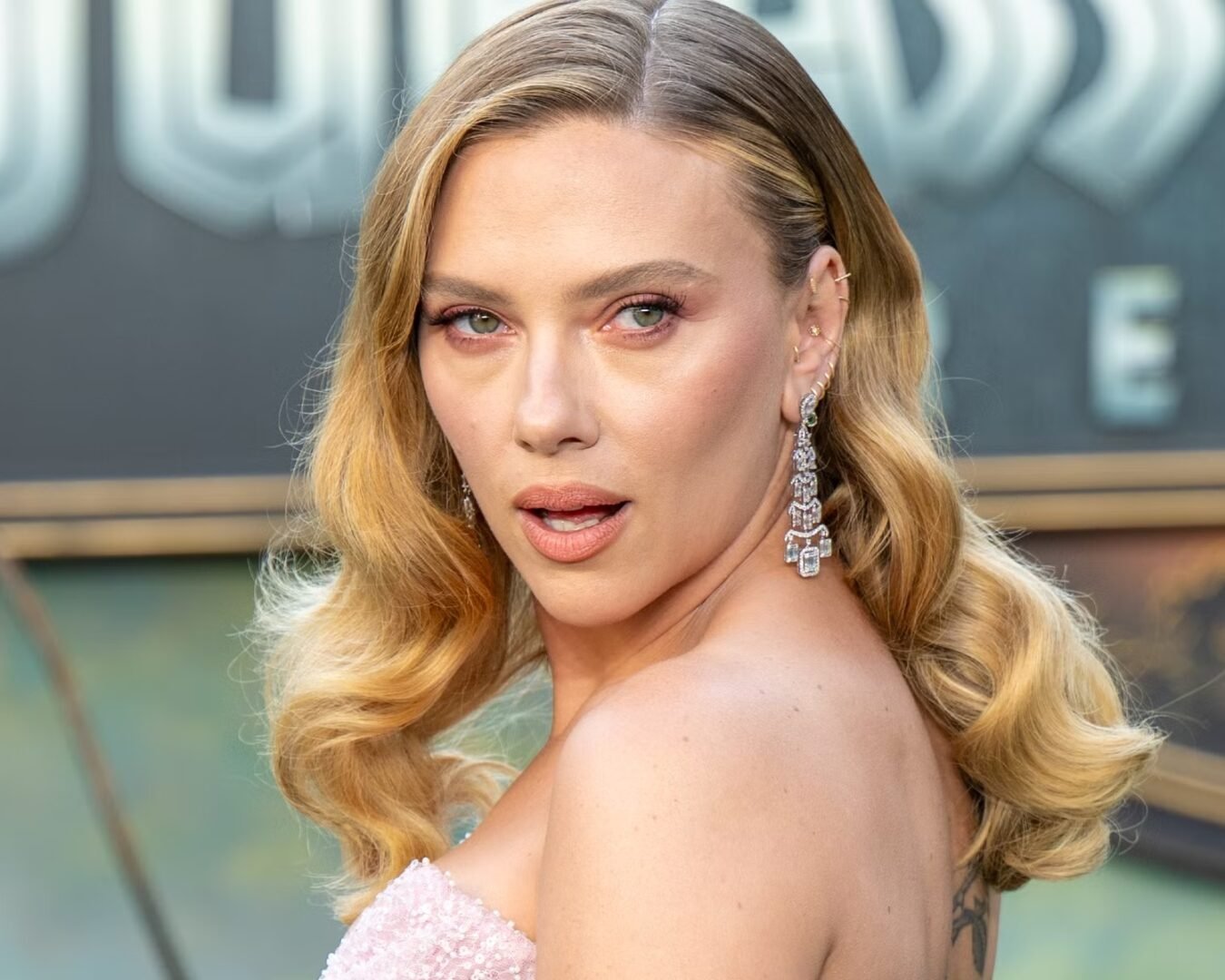
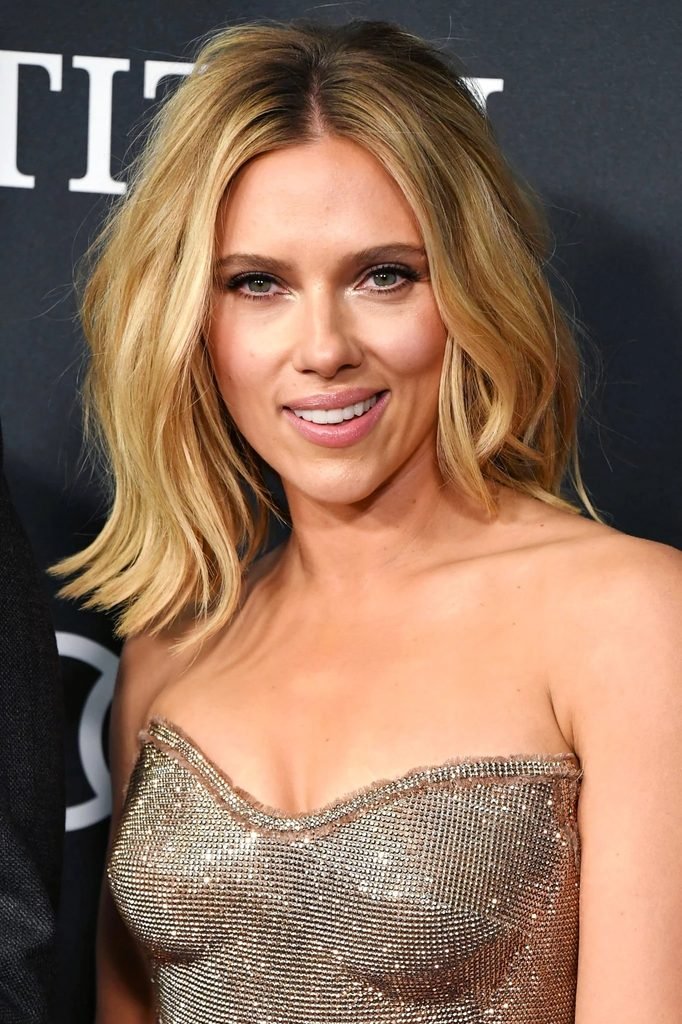
Before Scarlett Johansson became Marvel’s Black Widow, she was a young actress auditioning in New York, facing rejection and learning how difficult Hollywood could be.
Her journey to becoming one of the world’s most recognizable actresses didn’t happen overnight. It began when she was just a child—and long before Natasha Romanoff entered her life.
The Girl Who Wanted to Perform
Scarlett Ingrid Johansson was born on November 22, 1984, in Manhattan, New York City.
She grew up in a family with strong connections to the arts. Her father, Karsten Johansson, was a Danish-born architect, while her mother, Melanie Sloan, worked as a producer. Scarlett also grew up alongside her twin brother, Hunter, and older sister Vanessa, who would also pursue acting.
Johansson became interested in performing at a remarkably young age.
She loved movies and musicals and wanted to become part of that world herself. By around seven years old, she was already attending auditions.
One early experience, however, was particularly difficult.
During a visit to a talent agency, an agent showed more interest in one of her brothers than in Scarlett. For a young girl who desperately wanted to perform, the rejection was painful.
But instead of walking away, she kept going.
That determination would become an important part of her career.
Her First Professional Role Came at Eight
Johansson eventually moved away from the world of commercial auditions and toward film and theater.
That decision opened an important door.
At just eight years old, she appeared in the Off-Broadway production Sophistry, alongside Ethan Hawke.
For most children, eight is an age of school, games, and discovering new interests. Johansson was already learning how to perform professionally in front of a live audience.
Two years later, she made her film debut in Rob Reiner’s North.
She was only nine years old.
And Hollywood was beginning to notice.
The Role That Started Changing Everything
In 1996, Johansson landed her first leading role in Manny & Lo.
She played Amanda, a young girl caught in a complicated situation involving her older sister and foster care.
The movie wasn’t a massive Hollywood blockbuster, but it gave Johansson something more valuable at that stage of her career: recognition.
Critics began noticing that she wasn’t simply a young performer with a memorable face.
She had presence.
She could communicate complicated emotions on screen—and she could hold the audience’s attention.
Then came a role that would push her career to another level.
The Horse Whisperer
In 1998, Johansson appeared in Robert Redford’s The Horse Whisperer.
She played Grace MacLean, a teenager dealing with the emotional and physical consequences of a devastating riding accident.
Johansson was only 13.
Yet the role demanded much more than a typical child-star performance. She had to portray fear, anger, vulnerability, pain, and the difficult process of recovering from trauma.
The performance brought her significant critical attention.
More importantly, it helped change how people in Hollywood viewed her.
She wasn’t simply a child actress anymore.
She was becoming a serious performer.
Growing Up in Hollywood Was the Real Challenge
Being a talented child actor can open doors.
Growing up can be much harder.
Eventually, Hollywood begins asking a different question: What happens when the child actor becomes an adult?
Johansson faced that transition during her teenage years.
Rather than remaining limited to youthful roles, she began pursuing characters with greater emotional depth.
Films such as Ghost World helped establish her as an actress capable of playing complicated young women.
Then, in 2003, her career changed dramatically.
Lost in Translation Changed the Conversation
Johansson was 17 when she appeared in Sofia Coppola’s Lost in Translation.
The movie was a world away from the massive blockbusters that would eventually make her internationally famous.
There were no superheroes or giant action sequences.
Instead, the story focused on two lonely people in Tokyo.
Johansson played Charlotte, a young woman traveling with her husband who forms an unexpected connection with Bob Harris, played by Bill Murray.
The performance depended on subtle details—silence, expressions, small gestures, and emotions that were often left unspoken.
Johansson delivered.
Lost in Translation earned widespread critical acclaim and helped establish her as one of the most promising young actresses of her generation.
That same year, she also received major attention for Girl with a Pearl Earring.
The former child actress was becoming a serious Hollywood performer.
Hollywood Started Seeing Her Differently
After Lost in Translation, Johansson’s career accelerated.
She appeared in films including The Nanny Diaries, Match Point, and Vicky Cristina Barcelona, while continuing to move between dramas, comedies, thrillers, period pieces, and independent films.
That variety became one of her greatest strengths.
Johansson wasn’t building her career around one particular type of character.
She was building range.
And then came a role that would change the scale of her career completely.
Natasha Romanoff.
Scarlett Johansson Becomes Black Widow
In 2010, Scarlett Johansson appeared as Natasha Romanoff, better known as Black Widow, in Iron Man 2.
Marvel was already building its cinematic universe, but the enormous scale the franchise would eventually reach was difficult to predict.
Johansson’s character was initially part of a much larger ensemble.
Yet Natasha stood out.
She was intelligent, controlled, dangerous, and capable of holding her own against characters with extraordinary powers.
Unlike many superheroes, Black Widow didn’t have supernatural abilities.
Her strength came from training, intelligence, discipline, and experience.
Johansson made the character believable.
And audiences wanted to see more.
Black Widow Became a Defining Role
Johansson returned as Natasha Romanoff in The Avengers, Captain America: The Winter Soldier, Avengers: Age of Ultron, Captain America: Civil War, Avengers: Infinity War, and Avengers: Endgame.
Over time, Black Widow became one of the most recognizable characters in the Marvel universe.
But Marvel didn’t create Scarlett Johansson’s acting career.
It expanded the career she had already spent years building.
She had started acting as a child, survived the transition into adult roles, earned critical recognition, and worked across different genres long before she became Natasha Romanoff.
Marvel simply put everything she had built on the biggest stage yet.
She Proved She Was More Than Black Widow
Even as audiences increasingly associated Johansson with Black Widow, she continued taking on very different roles.
One of the most interesting examples was Her.
Johansson provided the voice of Samantha, an artificial intelligence who develops an intimate relationship with Joaquin Phoenix’s character.
She didn’t need a superhero costume.
She didn’t even need to physically appear on screen in the traditional sense.
Her voice was enough to create a character audiences could connect with.
It was another reminder that Johansson’s abilities extended far beyond action movies.
The Recognition Continued
Johansson’s dramatic work continued with films such as Marriage Story and Jojo Rabbit.
She received Academy Award nominations for both films at the 2020 Oscars.
The recognition represented another important chapter in her career.
The actress known around the world as Black Widow was still capable of earning major attention for performances completely removed from the Marvel universe.
But fans were still waiting for one thing.
A Black Widow movie of her own.
Black Widow Finally Got Her Story
For years, audiences had watched Natasha Romanoff fight alongside the Avengers.
She had battled enemies, protected her teammates, and ultimately sacrificed herself.
But one question remained:
When would Black Widow get her own movie?
In 2021, that finally happened.
Black Widow gave Johansson the opportunity to lead a movie centered on Natasha and explore more of the character’s history, relationships, and past.
After more than a decade of playing the character, Johansson finally got to tell a story centered on the superhero who had become one of the defining roles of her career.
It felt like the closing chapter of a journey that had begun years earlier.
The Story Started Long Before Marvel
This is where Scarlett Johansson’s story becomes more interesting.
If you only know her as Black Widow, it can be easy to assume Marvel created her career.
It didn’t.
The foundation was built long before Natasha Romanoff appeared.
It was built when a seven-year-old girl faced rejection at an audition.
It was built when an eight-year-old stepped onto an Off-Broadway stage.
It was built when a nine-year-old appeared in her first movie.
It was built when a 13-year-old worked with Robert Redford.
And it was built when a teenager took on Lost in Translation and demonstrated that she could carry a mature dramatic performance.
Only after all of that did she enter the Marvel universe.
The Long Road Behind Black Widow
Scarlett Johansson’s rise to fame isn’t simply a story about becoming a Hollywood star.
It’s a story about continually evolving.
First, she had to prove she wasn’t just a child actress.
Then she had to establish herself as an adult performer.
After that, she had to prove she could handle blockbuster filmmaking while continuing to build a career outside major franchises.
And eventually, she had to show that she was more than the character that made her internationally famous.
That’s what makes her journey so compelling.
Hollywood can give an actor an opportunity.
Staying relevant for decades is something else entirely.
Johansson kept changing.
She kept taking different roles.
And she kept building a career beyond the character audiences knew best.
The most interesting part of Scarlett Johansson’s story isn’t the moment she became Black Widow.
It’s everything that happened before she ever put on the suit.
The little girl who once walked into an audition and discovered that someone else had been chosen didn’t disappear.
She simply kept going.
She kept auditioning.
She kept learning.
She kept evolving.
And eventually, she became an actress Hollywood could no longer ignore.
But there was one difficult period in Johansson’s early adult career when the way Hollywood viewed young women became a serious obstacle—and it changed how she approached her career.
That chapter reveals why the road behind Black Widow was far more complicated than most fans ever realized.