

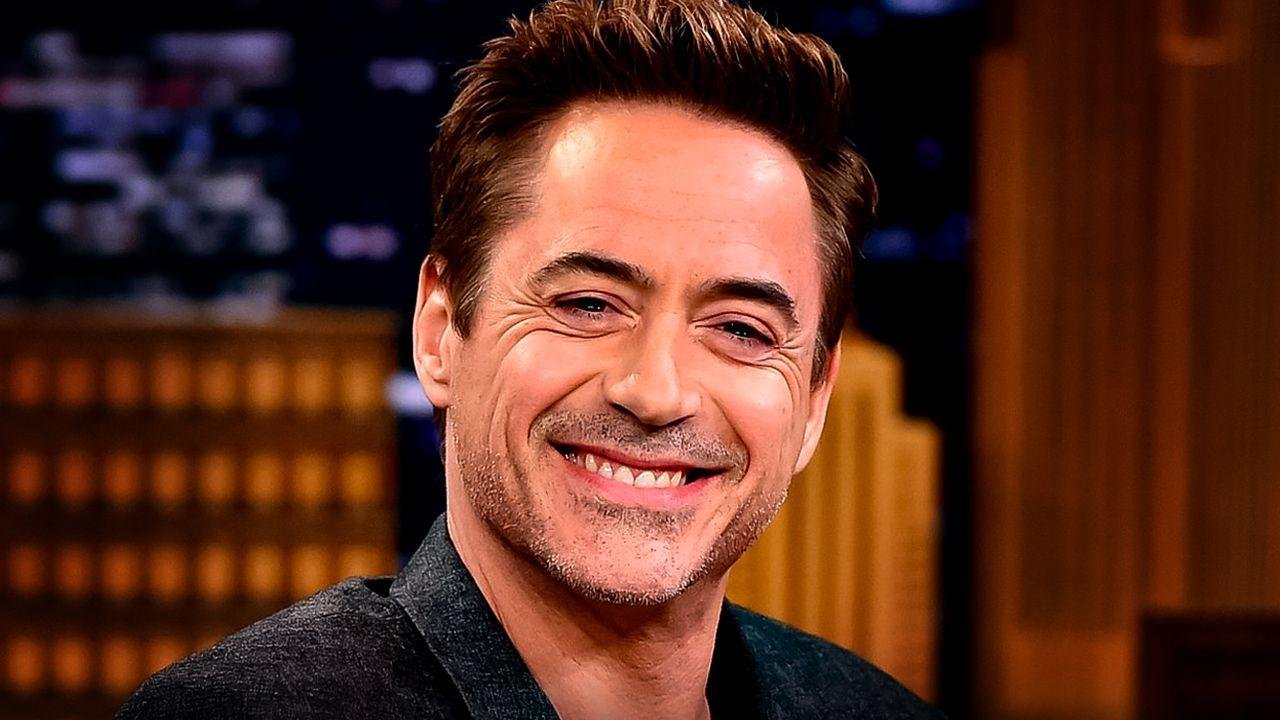
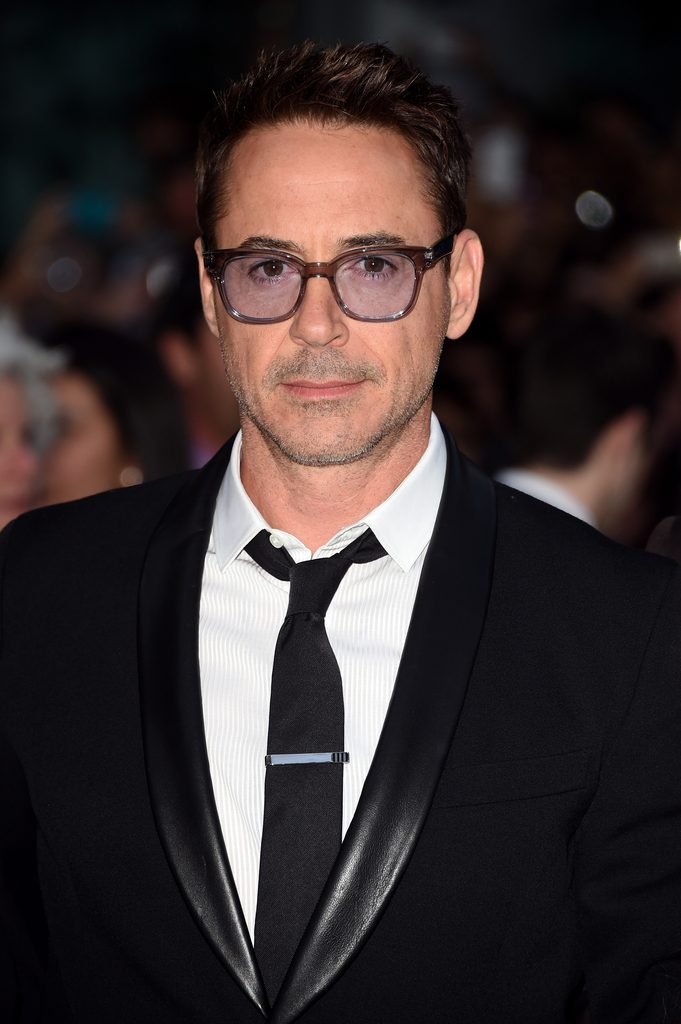
Hollywood once saw Robert Downey Jr. as one of its brightest young stars.
He had the talent, the charisma and the screen presence. His performance in Chaplin earned him an Academy Award nomination and seemed to confirm that he was destined for a long career at the top.
Then everything changed.
Substance abuse, arrests and legal troubles began overshadowing his work. Jobs disappeared. Studios became hesitant to trust him with major productions. For a while, it seemed possible that one of Hollywood’s most gifted actors might never reach his full potential.
Then came Tony Stark.
When Marvel cast Downey as Iron Man, the decision was viewed as a risk. Instead, it became one of the most important casting choices in modern movie history.
But the real story isn’t simply about Iron Man.
It’s about an actor who lost his way, spent years rebuilding his career and eventually returned to Hollywood at a level few could have imagined.
A Hollywood Childhood
Robert Downey Jr. was born into filmmaking.
His father, Robert Downey Sr., was an independent filmmaker, so movies were part of his world from an early age. Downey began acting as a child and gradually moved toward professional work.
As a young actor, he stood out.
He didn’t have the polished, predictable image of a traditional Hollywood leading man. There was something unusual about him—quick-witted, unpredictable and capable of bringing an eccentric energy to almost any character.
That unpredictability would eventually become one of his greatest strengths.
It would also become part of the reason his career became so complicated.
The Performance That Put Him on the Map
By the late 1980s and early 1990s, Downey was becoming increasingly difficult for Hollywood to ignore.
Then came Chaplin.
Playing legendary comedian Charlie Chaplin was an enormous challenge. Downey had to recreate Chaplin’s distinctive physical comedy, mannerisms and personality while carrying an entire film around the character.
He delivered.
His performance earned him an Academy Award nomination for Best Actor at the 1993 Oscars.
For many people, it looked like the beginning of a major Hollywood career.
Downey had proven that he wasn’t simply charismatic.
He could transform.
But the career Hollywood expected from him was about to take a very different path.
When Talent Wasn’t Enough
Downey’s biggest problem wasn’t his acting ability.
It was everything happening outside the performances.
His struggles with substance abuse became increasingly public, along with arrests and legal problems. As those issues continued, they began affecting his professional life.
Hollywood studios can take risks on difficult personalities, but major productions also depend on reliability.
And Downey’s reputation was becoming a liability.
Roles disappeared. Projects became harder to secure. Opportunities that might once have gone to him started going elsewhere.
The actor who had received an Oscar nomination for Chaplin was now fighting simply to keep his career alive.
The question wasn’t whether Robert Downey Jr. could act.
Everyone knew he could.
The question was whether a major studio could trust him with an expensive production.
The Slow Road Back
Downey’s comeback didn’t happen because of one miraculous movie.
It happened gradually.
He kept working. He took smaller roles and returned to television. Slowly, he began rebuilding his professional reputation.
One important step came with Ally McBeal, where his performance earned him a Golden Globe and brought him back into the mainstream conversation.
But the bigger achievement was something audiences couldn’t see on screen.
Downey was rebuilding trust.
Hollywood hadn’t forgotten his talent. What had been damaged was confidence in his reliability.
So he had to prove, project by project, that he could show up, do the work and handle the responsibility that came with major productions.
Eventually, an opportunity arrived that would change everything.
Then Marvel Took the Risk
Tony Stark was a complicated character.
He was brilliant, wealthy, arrogant and funny. He was also deeply flawed.
And Marvel needed an actor who could make all those contradictions work at once.
Robert Downey Jr. turned out to be that actor.
When he was cast as Tony Stark in Iron Man, the decision carried obvious risk because of his past.
But there was also something almost perfectly suited about the casting.
Tony Stark needed someone who could make arrogance entertaining without making the character impossible to like. He needed someone who could deliver rapid-fire humor while still revealing vulnerability underneath.
Downey had exactly that combination.
In some ways, the actor and the character even seemed to share a strange thematic connection.
Tony Stark was a man forced to confront his mistakes and become someone different.
Downey was an actor who had spent years rebuilding his own life and career.
Iron Man Changed Everything
When Iron Man arrived in 2008, Robert Downey Jr.’s career entered an entirely different phase.
The film became the foundation of the Marvel Cinematic Universe, and Tony Stark quickly became one of the defining characters of modern blockbuster cinema.
Downey returned as Stark throughout the franchise, appearing in films including Iron Man 2, The Avengers, Iron Man 3, Avengers: Age of Ultron, Captain America: Civil War, Spider-Man: Homecoming, Avengers: Infinity War and Avengers: Endgame.
The role transformed him into one of the world’s most recognizable movie stars.
The actor Hollywood had once struggled to trust was now at the center of one of the biggest film franchises in history.
But Iron Man wasn’t the only reason his comeback mattered.
The Performance People Sometimes Forget
It’s easy to look at Downey’s career and conclude that Iron Man simply saved him.
But his comeback was already underway.
He continued taking on roles that showed he hadn’t lost the dramatic ability that had made him famous in the first place.
One particularly memorable example was Tropic Thunder, in which he played Kirk Lazarus, an intensely committed fictional actor whose extreme approach to his craft becomes part of the film’s satire.
Downey received another Academy Award nomination for the performance, this time for Best Supporting Actor.
That mattered.
His comeback wasn’t simply about becoming a superhero.
He was proving that the acting talent that had made people believe in him decades earlier was still there.
Then Came the Oscar
Years later, Downey took on a role that couldn’t have been further removed from Tony Stark.
Christopher Nolan’s Oppenheimer gave him the part of Lewis Strauss, a powerful and complicated figure whose relationship with J. Robert Oppenheimer becomes an important part of the film.
There was no Iron Man armor.
No superhero action.
No enormous franchise built around him.
The focus was on the performance.
And this time, Downey won.
At the 96th Academy Awards in 2024, he received the Oscar for Best Supporting Actor for Oppenheimer.
The moment carried a remarkable sense of history.
Decades earlier, Downey had stood among the Oscar nominees for Chaplin.
Then came years when his career appeared to be falling apart.
Then Iron Man.
Then the Marvel phenomenon.
And finally, the Academy Award.
What Those Lost Years Really Changed
The difficult years weren’t simply an interruption between two successful periods.
They changed Downey’s relationship with his career.
He had experienced what it meant to have enormous talent but still lose opportunities because people didn’t trust him.
He had seen his reputation become bigger than his performances.
And rebuilding meant more than finding another good role.
It meant becoming dependable.
That may have been one of the most important changes in his entire career.
Once Downey consistently demonstrated that he could handle the responsibility of major productions, Hollywood was willing to take another chance.
That chance became Iron Man.
And Iron Man became something much bigger than anyone expected.
Why Tony Stark Worked So Well
Perhaps the most fascinating part of the story is why Downey seemed so naturally suited to Tony Stark.
Stark is a character built around contradictions.
He’s brilliant but reckless.
Confident but insecure.
Funny but deeply damaged.
He makes mistakes and spends much of his story trying to become better because of them.
Downey brought something to the character that couldn’t simply be written into a screenplay.
He understood complexity.
He understood what it meant for audiences to know about your mistakes.
And he understood what it felt like to have to prove yourself again.
That’s one reason the performance felt so natural.
Downey wasn’t simply delivering the dialogue.
He brought a lived-in quality to the character that helped make Tony Stark feel real.
The Comeback Was Bigger Than Iron Man
Robert Downey Jr.’s story is often described as one of Hollywood’s great comebacks.
But there’s more to it than that.
It’s a story about talent surviving difficult years.
It’s a story about reputation and trust.
And it’s a story about the difference between being given another opportunity and being ready to make something of it.
Hollywood eventually gave Downey another opportunity.
He made the most of it.
Then he kept going.
Iron Man became a global phenomenon. His performances continued to earn recognition. And years later, Oppenheimer gave him another opportunity to show audiences what he could do without the armor, the jokes or the machinery of a superhero franchise.
The Oscar proved that the actor was still there underneath it all.
From Almost Lost to Unforgettable
There is a remarkable symmetry to Robert Downey Jr.’s career.
He began as the son of a filmmaker.
He became a promising young actor.
He earned an Oscar nomination for Chaplin.
Then came years of personal and professional turmoil.
He slowly rebuilt his career.
He became Iron Man.
And eventually, he won the Oscar that had once seemed so far away.
But the most compelling part isn’t simply that he came back.
It’s that he came back with a different understanding of what success meant.
The young actor who seemed destined for greatness had to experience what it felt like to lose that future.
The older actor who returned to the top knew exactly how fragile a career could be.
And perhaps that’s why his second act feels so extraordinary.
Behind Iron Man was a real story about someone who had already experienced a fall.
Behind the Oscar was an actor who knew what it felt like when Hollywood stopped believing in him.
Robert Downey Jr. didn’t simply get another chance.
He turned that chance into one of the most remarkable second acts in modern Hollywood.
Hollywood nearly gave up on Robert Downey Jr.
He came back, became Iron Man—and eventually finished the journey with an Oscar.