


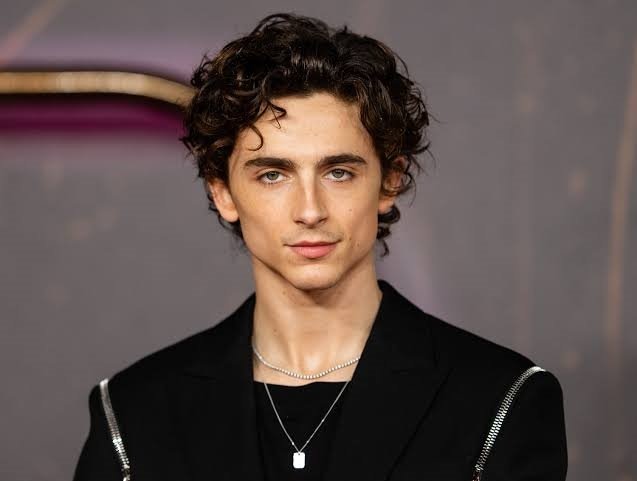
Timothée Chalamet’s rise to Hollywood fame can look almost unreal.
One moment, he was a young actor from New York appearing in small television and film roles. Then came Call Me by Your Name. Suddenly, audiences everywhere knew his name. Dune turned him into a blockbuster leading man. Wonka showed he could carry a musical. And then came the challenge of portraying one of the most recognizable musicians in American history: Bob Dylan.
From the outside, it can seem like Chalamet became famous overnight.
But that version of the story misses the most interesting part.
Long before the magazine covers, major franchises and global premieres, Chalamet was already auditioning, performing, learning and trying to find his place in Hollywood.
And surprisingly, one of the funniest pieces of evidence from his early years is a school rap video.
Before Hollywood Knew His Name
Timothée Chalamet grew up in New York City in a family with strong connections to the arts.
His mother, Nicole Flender, was a former Broadway dancer, while his father, Marc Chalamet, worked in publishing. His older sister, Pauline Chalamet, would also go on to become an actress.
For Chalamet, performing wasn’t some distant fantasy. Creativity was already part of his everyday environment.
He eventually attended Fiorello H. LaGuardia High School of Music & Art and Performing Arts, the famous New York school known for producing generations of performers and artists.
It was an environment where ambition was normal.
Everyone around him was trying to become something.
But attending a performing arts school didn’t guarantee success. Chalamet still had to audition, deal with rejection and slowly build a professional career.
And that’s exactly what he started doing.
The Young Actor Who Was Already Working
Chalamet began appearing professionally while he was still young, taking small roles in television before most movie audiences knew who he was.
One of those early opportunities came with the television series Homeland, where he had a recurring role.
Then came Interstellar.
Christopher Nolan’s enormous science-fiction film gave Chalamet a small but memorable opportunity. He played the younger version of Casey Affleck’s character, Tom Cooper.
At the time, however, there was little reason for audiences to remember him.
He was simply one young actor in a huge Hollywood production.
Nobody watching the film could have known that the teenager appearing on screen would eventually become one of the industry’s most recognizable young stars.
That’s what makes looking back at Chalamet’s early career so interesting.
The signs were there.
The fame just wasn’t.
Meet Lil’ Timmy Tim
Before Dune. Before Wonka. Before the red carpets and international premieres, Chalamet had another identity.
Lil’ Timmy Tim.
Yes, the future Hollywood star once made a teenage rap video for a school project.
The video later resurfaced online after Chalamet became famous, turning into one of those wonderfully awkward pieces of celebrity history that fans couldn’t stop talking about.
It’s funny because we know what happened next.
But there’s something more revealing about it than the embarrassment.
The young Chalamet clearly wasn’t afraid to perform.
He was willing to experiment, try something unusual and put himself in front of an audience—even if the result wasn’t exactly Grammy material.
Years later, that same willingness to experiment would become one of the defining features of his career.
The actor who would eventually portray Paul Atreides, Willy Wonka and Bob Dylan was once making a goofy school rap video.
Hollywood probably wasn’t ready for him yet.
The Years Nobody Saw
After his early roles, Chalamet’s career didn’t suddenly explode.
He continued auditioning and taking whatever opportunities came his way.
That’s the part of an actor’s journey audiences rarely see.
A successful career can look incredibly fast when viewed through headlines. But behind those headlines are usually years of auditions, smaller roles, rejection and waiting for the right opportunity.
Chalamet experienced that process too.
There were no guarantees that he would become a major movie star.
Then came 2017.
And everything changed.
Call Me by Your Name Changed Everything
Luca Guadagnino’s Call Me by Your Name became the turning point in Chalamet’s career.
He played Elio Perlman, an intelligent and emotionally complicated teenager spending the summer with his family in northern Italy.
The performance was intimate and restrained. Rather than relying on spectacle, the film depended heavily on Chalamet’s ability to communicate emotion through subtle expressions and quiet moments.
Audiences and critics took notice.
Chalamet received an Academy Award nomination for Best Actor, becoming one of the youngest actors ever nominated in the category.
Suddenly, the young actor who had spent years taking smaller opportunities was being discussed as one of Hollywood’s most promising new talents.
It wasn’t simply a successful movie.
It was the moment the industry began looking at Chalamet differently.
He Didn’t Stay in One Lane
A breakout performance can sometimes become a trap.
An actor becomes associated with one character, one type of movie or one particular image—and suddenly every role they receive starts looking the same.
Chalamet went in the opposite direction.
After Call Me by Your Name, he continued moving between very different projects.
He appeared in Beautiful Boy, playing Nic Sheff opposite Steve Carell. He took on the role of Laurie in Greta Gerwig’s Little Women. He appeared in Wes Anderson’s The French Dispatch.
And then he entered an entirely different world.
Dune.
That choice would change the scale of his career.
Dune Turned Him Into a Global Star
If Call Me by Your Name established Chalamet as a serious young actor, Dune introduced him to an enormous global audience.
Denis Villeneuve’s adaptation of Frank Herbert’s science-fiction epic was one of Hollywood’s biggest productions.
Chalamet played Paul Atreides, a young heir whose life changes dramatically when his family becomes involved in the dangerous political struggle surrounding Arrakis.
The role demanded something completely different from his earlier work.
There was action, physical preparation, enormous sets, complex visual effects and the responsibility of carrying a massive franchise.
Chalamet was no longer simply the promising young actor from an acclaimed independent film.
He was now leading one of Hollywood’s biggest science-fiction franchises.
And he still wasn’t done changing direction.
From Paul Atreides to Willy Wonka
Few career moves seemed more unexpected than Chalamet becoming Willy Wonka.
The character had already been immortalized on screen, meaning any new version would inevitably face comparisons with previous performances.
But Wonka took a different approach.
Instead of retelling the familiar story, the film explored a younger Wonka and the journey that eventually shaped the eccentric chocolatier audiences already knew.
For Chalamet, it was another major departure.
He had to combine comedy, romance, singing and dancing while carrying a large-scale family musical.
It was a very different challenge from playing Paul Atreides.
And Wonka became another major commercial success.
Once again, Chalamet had demonstrated that audiences could follow him into a completely different kind of movie.
Then Came Bob Dylan
If there was one role that seemed designed to test just how far Chalamet could stretch himself, it was Bob Dylan.
In James Mangold’s A Complete Unknown, Chalamet took on the legendary singer-songwriter during a crucial period of Dylan’s early career.
This wasn’t simply a matter of resembling Dylan.
Chalamet had to capture his distinctive voice, mannerisms and stage presence while performing Dylan’s songs himself.
That’s a significant challenge when the person you’re portraying is one of the most recognizable musicians of the twentieth century.
Every detail is familiar to audiences.
The voice.
The movements.
The songs.
The personality.
For Chalamet, the role offered another opportunity to move beyond the image of the young Hollywood leading man and take on a figure with an enormous cultural legacy.
Once again, he chose a role that demanded something new.
The Pattern Behind Chalamet’s Career
Look closely at Chalamet’s filmography and a pattern starts to emerge.
He rarely seems interested in simply repeating himself.
Elio in Call Me by Your Name required emotional vulnerability.
Laurie in Little Women required charm and warmth.
Paul Atreides required physical intensity and the ability to anchor a huge science-fiction story.
Willy Wonka demanded comedy, musical performance and a lighter touch.
Bob Dylan required musical transformation and an interpretation of a real historical figure.
These characters have very little in common.
And that’s precisely what makes the career interesting.
Instead of allowing one successful role to define him permanently, Chalamet has continued looking for projects that require a different version of himself.
The “Overnight Success” That Took Years
That’s why describing Timothée Chalamet as an overnight success doesn’t quite tell the full story.
Yes, Call Me by Your Name changed his public profile almost instantly.
But the actor audiences discovered in 2017 had already spent years preparing for that moment.
He had attended a performing arts school.
He had auditioned.
He had appeared on television.
He had worked on Interstellar.
He had taken smaller roles.
He had experienced the uncertainty that comes with trying to establish yourself as an actor.
The public simply hadn’t been watching yet.
That’s often how Hollywood success works.
Audiences see the breakthrough.
They don’t see everything that happened before it.
What Makes Chalamet So Watchable?
Part of Chalamet’s appeal comes from his versatility.
He can play vulnerable characters without making them feel weak. He can bring intensity to dramatic roles without losing subtlety. And he can move into large commercial productions without completely abandoning the qualities that made audiences interested in him in the first place.
His career has also benefited from the range of filmmakers he’s worked with.
From Luca Guadagnino and Greta Gerwig to Denis Villeneuve, Wes Anderson and James Mangold, Chalamet has repeatedly found himself in projects with very different creative identities.
That variety has allowed him to build a career that isn’t dependent on a single genre.
One film might be an intimate drama.
The next could be science fiction.
Then a musical.
Then a musical biographical drama.
And somehow, the transition doesn’t feel completely out of character.
From New York Kid to Global Star
Look back at the beginning and the transformation seems almost unbelievable.
A creative kid growing up in New York.
A student at a prestigious performing arts school.
A young actor appearing in Homeland.
A small role in Interstellar.
A school rap video as Lil’ Timmy Tim.
Years of auditions and smaller opportunities.
Then Call Me by Your Name.
Then Dune.
Then Wonka.
Then Bob Dylan.
Put those moments next to each other and it looks like everything happened at incredible speed.
But the spaces between those moments tell a different story.
There were years of preparation between the headlines.
Hollywood Didn’t Discover Him Overnight
Maybe that’s the more interesting way to look at Chalamet’s rise.
Hollywood didn’t suddenly create a star in 2017.
It simply gave a much larger audience access to an actor who had already been working toward that moment.
By the time audiences discovered him through Call Me by Your Name, Chalamet had already learned how to audition, how to work on a professional set and how to deal with the uncertainty that comes with an acting career.
He had already experienced being on major productions without being famous.
He had already taken smaller opportunities.
And, perhaps most importantly, he had already shown a willingness to experiment.
The world just hadn’t been paying close attention.
The Next Chapter Is Still Being Written
The most interesting thing about Chalamet’s career may be that it still feels unfinished.
He’s already moved from independent drama to science fiction, from literary adaptations to musicals and from fictional characters to one of America’s most influential musicians.
Yet there is no obvious limit to where he could go next.
The teenager who once performed as Lil’ Timmy Tim probably couldn’t have imagined that he would eventually play Willy Wonka, Paul Atreides and Bob Dylan.
And the audiences who first noticed him in Call Me by Your Name probably couldn’t have predicted how quickly his career would expand.
That’s what makes his story worth following.
Not because he became famous overnight.
But because when the spotlight finally arrived, he was ready for it.
It Was Never Really an Overnight Success
Timothée Chalamet’s rise looks incredibly fast because the world only started paying close attention at a certain point.
But the work began long before the fame.
Before Dune, there was Interstellar.
Before Wonka, there were years of smaller performances.
Before Bob Dylan, there was a young actor trying to prove that he belonged.
And before Hollywood knew his name, there was simply a creative kid from New York who kept performing.
The biggest surprise about Timothée Chalamet isn’t that he became a global star.
It’s how much preparation was already behind him when the world finally noticed.
Hollywood may have discovered Timothée Chalamet in 2017.
But Timothée Chalamet had been preparing for Hollywood long before Hollywood was paying attention.