

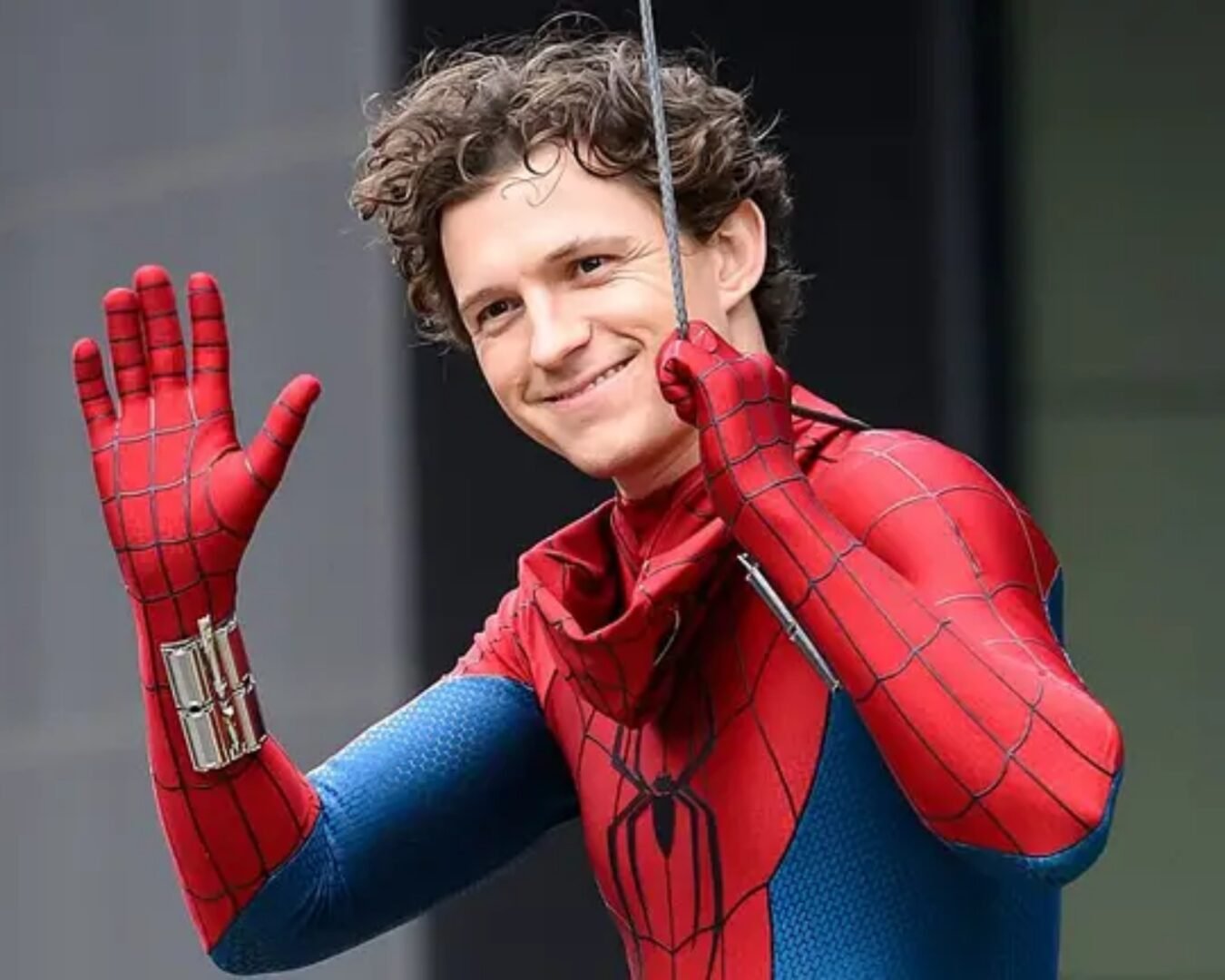

Before the superhero suit.
Before the billion-dollar movies.
Before millions of fans around the world knew his name.
Tom Holland was simply a boy from London who loved performing.
Today, he’s one of the most recognizable actors of his generation. To millions of fans, he’s Spider-Man.
But Holland’s journey to Hollywood didn’t begin with a superhero audition.
It began with dance.
Long before he was swinging between skyscrapers as Peter Parker, Holland was learning movement, timing, discipline and performance. Those skills would eventually help prepare him for one of the most physically demanding roles in modern blockbuster cinema.
The surprising part?
His journey to Spider-Man started on a London stage.
A Boy Who Loved to Dance
Tom Holland grew up in Kingston upon Thames, London.
As a child, he developed an interest in dance, particularly hip-hop. What started as an activity gradually opened a much bigger door.
His dancing eventually caught the attention of people connected to musical theater, leading him toward auditions for Billy Elliot the Musical.
At the time, Holland couldn’t have known where the opportunity would take him.
He certainly wasn’t auditioning to become Spider-Man.
He was simply a young performer looking for a chance to perform.
That chance would change everything.
The Role That Taught Him to Perform
Holland eventually joined Billy Elliot the Musical and later took on the title role.
For a young performer, it was an intense education.
Musical theater requires far more than memorizing lines. Holland had to combine acting, dancing and physical performance while appearing in front of a live audience.
And unlike a film set, there was no second take.
If something went wrong, the show continued.
That experience taught him something that would become incredibly valuable later: how to perform under pressure.
It also helped develop the physical confidence that would eventually become one of his biggest advantages as an actor.
From the Stage to the Big Screen
Holland’s transition into film wasn’t instant.
His first major film breakthrough came with The Impossible, the 2012 disaster drama directed by J.A. Bayona.
The role was dramatically different from his theater work.
Instead of relying primarily on movement and live performance, Holland had to carry emotionally difficult scenes alongside established actors.
His performance attracted attention and showed that he wasn’t simply a talented young dancer.
He could act.
Hollywood had started paying attention.
But his biggest opportunity was still ahead.
The Audition That Changed His Life
Imagine being a young actor and discovering that you have a chance to play one of the most famous superheroes in the world.
That was the opportunity waiting for Holland.
Marvel was searching for a new Peter Parker, and the role came with enormous expectations.
Spider-Man wasn’t just another character.
He was one of the most recognizable superheroes ever created, with generations of fans already familiar with previous versions.
The actor chosen to play Peter Parker would immediately face comparisons.
Holland had something particularly useful for the role.
He could act, but he could also move naturally.
Years of dance and stage performance had given him an understanding of physical storytelling. Spider-Man needed someone who could make the character’s movement look convincing while still capturing Peter Parker’s awkwardness and humor.
Eventually, Holland got the part.
The boy who had started dancing in London was about to become Spider-Man.
The World Meets a New Spider-Man
Holland first appeared as Peter Parker in Captain America: Civil War.
He didn’t have an entire movie to introduce his version of the character.
He had to make an impression quickly.
And he did.
His Peter Parker felt young, energetic, awkward and funny, while still carrying the vulnerability that made the character relatable.
For audiences, the new Spider-Man immediately stood out.
Then came the solo movies.
Spider-Man: Homecoming established Holland as the lead of his own franchise, followed by Spider-Man: Far From Home and Spider-Man: No Way Home.
His career had changed dramatically.
The young performer who had once worked on a London stage was now one of the faces of the biggest movie franchise in the world.
But becoming Spider-Man created a new problem.
How do you make sure the world remembers the actor behind the mask?
More Than Just Spider-Man
Becoming closely associated with a superhero can be both an incredible opportunity and a difficult challenge.
The fame is enormous.
But sometimes the character becomes more recognizable than the person playing it.
Holland began taking on projects that allowed audiences to see different sides of him.
He appeared in dramatic films, action movies and darker stories, gradually moving beyond the image of Peter Parker.
That transition is important.
His career isn’t simply a story about becoming famous.
It’s also about what happens after you become famous for one particular role.
The Skills That Prepared Him for Spider-Man
Looking back, several parts of Holland’s childhood career seem almost perfectly suited to the role he would eventually land.
Dance Taught Him Movement
Spider-Man is an unusually physical character.
He jumps, flips, climbs and moves with a distinctive rhythm.
Holland’s background in dance gave him an early understanding of balance, timing and body control.
Theater Taught Him Discipline
Live theater requires performers to be prepared every night.
There are no second takes and no opportunity to stop the show because something went wrong.
That experience gave Holland valuable training in performing under pressure.
Film Taught Him Emotional Control
The Impossible showed that Holland could handle emotionally demanding material.
That mattered because Peter Parker isn’t simply a superhero.
He’s also a teenager dealing with fear, loss, friendship and responsibility.
Spider-Man Put Everything Together
The role required almost every skill Holland had developed.
He needed physical ability.
He needed comedic timing.
He needed dramatic range.
And he needed the confidence to carry a massive studio franchise.
His unusual journey had prepared him for exactly that combination.
Growing Up in the Spotlight
One of the more remarkable parts of Holland’s story is how quickly his life changed.
For years, he was simply training, performing and auditioning.
Then Spider-Man happened.
Suddenly, he was appearing in some of the biggest movies in the world while still relatively young.
Fame brings opportunities, but it also brings constant attention.
Interviews become headlines.
Career decisions become public.
Every new movie is examined.
And when your most famous character wears a mask, an unusual question naturally follows:
Who is Tom Holland when he’s not Spider-Man?
That question has become increasingly important as he has taken on different projects.
The Challenge of Escaping the Mask
For Holland, moving beyond Spider-Man isn’t about rejecting the character.
Peter Parker changed his life.
But an actor’s career can’t always remain in the same place.
Holland has already demonstrated an interest in different genres and more challenging material, giving audiences opportunities to see him outside the superhero world.
The challenge is familiar to many actors who become strongly associated with one iconic role.
The character opens the door.
The actor then has to show audiences what else he can do.
From London Dancer to Global Star
Looking back, Holland’s journey seems almost perfectly connected.
A young boy discovers dance.
Dance leads to musical theater.
Theater develops his discipline and physical performance.
Film introduces him to a wider audience.
Then Marvel comes calling.
Suddenly, the boy who once performed on a London stage is wearing the Spider-Man suit in front of millions of people around the world.
None of those early steps looked like a direct route to Hollywood.
But each one gave him something he would eventually need.
That’s what makes his story so interesting.
The path only makes sense when you look backward.
The Boy Behind the Mask
Today, Tom Holland is instantly associated with Peter Parker.
The suit.
The web-slinging.
The jokes.
The superhero.
But before all of that, he was a young performer learning how to move, act and handle the pressure of a live audience.
His journey didn’t follow the traditional route to Hollywood.
It went through dance.
It went through theater.
It went through a dramatic film.
And eventually, it led to one of the most famous roles in cinema.
Spider-Man made Tom Holland a global star.
But the skills that helped him become Spider-Man were being developed long before Marvel knew his name.
What Comes Next?
Tom Holland has already achieved something most actors spend their entire careers chasing.
Global recognition.
Major franchises.
A place in one of the most successful superhero stories in modern cinema.
But his most interesting chapter may be the one that comes after Spider-Man.
Because the world already knows what Tom Holland looks like behind the mask.
The next challenge is discovering who he can become without it.
Before he was Spider-Man, he was a dancer from London.
And every step along the way helped prepare him for the role that changed his life.